



Best Dog Breeds for Arizona: Desert Heat vs. High Country
Arizona is not one climate. A July afternoon on a Scottsdale sidewalk and a snowy January morning in Flagstaff ask very different things of a dog, and Doodling Pups sits in Cottonwood, in the Verde Valley between the two. That is why choosing among the best dog breeds for Arizona depends less on the state itself and more on the part of it where your dog will actually live, walk and nap.
No single breed is best everywhere in Arizona. In the Valley (Phoenix, Scottsdale and Mesa), dogs with lighter, single-layer coats, a moderate size and a normal-length muzzle generally have an easier time with the heat, and every dog there needs an owner who plans around summer. In the high country around Prescott, Sedona and Flagstaff, milder summers and real winters open the door to fuller-coated dogs. Bernedoodles and Goldendoodles can do well in both settings when their coat care and daily routine match where they live.
1. Start with where you live, not with the breed
Families in Phoenix, Scottsdale and Mesa deal with long, hot summers, warm nights and pavement, block walls and artificial turf that soak up the sun and hold onto it well after dark. For a dog, that means outdoor time moves to the edges of the day for months at a stretch.
The high country is a different picture. Prescott, Sedona and Flagstaff see cooler summers, and Flagstaff in particular gets a true winter with snow. A dog with a heavy coat that has to be managed carefully in the Valley may be perfectly comfortable on a pine-shaded trail up north.
Before you fall for a breed, picture your dog's ordinary day: where it sleeps, where it walks and how much time it spends outdoors in your summer.
2. Coat type matters more than coat length
It is tempting to assume a long coat is the problem in hot weather. What matters more is how the coat is built.
Double coats have a soft undercoat beneath longer guard hairs. The American Kennel Club notes that this undercoat insulates against both heat and cold, and that shaving a double-coated dog can increase the risk of heat stroke and lead to patchy regrowth.
Single coats, like the Poodle's, have no soft undercoat. The AKC says these dogs can benefit from professional clipping to prevent matting and stay cooler, but they should never be shaved to the skin. Its guidance is to leave at least an inch of coat for protection from sunburn and bug bites.
Color plays a part too. Darker coats absorb more sunlight, so a black dog standing in the afternoon sun warms up faster than a cream one.
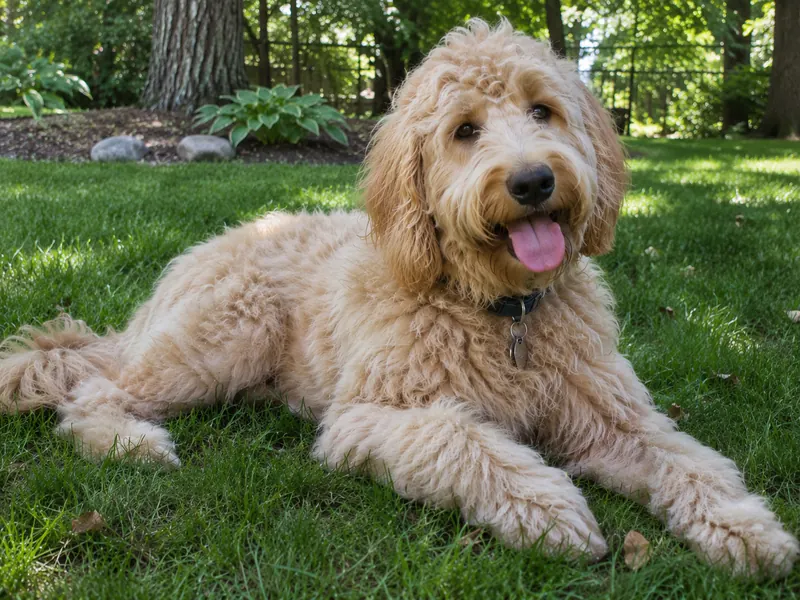
Doodle coats sit between their parent breeds. The Poodle side brings a single coat, while the Golden Retriever and Bernese Mountain Dog sides bring double coats, so an individual Goldendoodle or Bernedoodle can land anywhere along that range. This is one of the best reasons to look at the parents' coats before you choose a puppy.
3. Size, muzzle shape and body condition
The AKC identifies a few traits that make overheating more likely:
Flat-faced (brachycephalic) breeds are more sensitive to heat because breathing already takes extra effort.
Extra body weight traps heat, so keeping a dog lean matters more in a hot climate.
Senior dogs are more likely to have conditions that make heat harder to handle.
Larger dogs build up heat faster in a closed car, which is one more reason never to leave any dog in a parked vehicle.
4. Energy level and your daily routine
A high-energy dog in the Valley still needs exercise in July. It just has to happen at dawn, after dark or indoors. If your schedule makes early walks hard, a calmer dog that is happy with short outings and indoor play may suit you better than one bred for all-day work. In the high country, a dog that loves long hikes has more months of comfortable weather to enjoy them.
Trait | Easier fit for the Valley | Easier fit for the high country |
|---|---|---|
Coat | Single-layer coat kept in a practical trim | Fuller coats, including double coats |
Color | Lighter shades warm up less in the sun | Matters less, though sun still warms a dark coat |
Muzzle | Normal-length nose | Normal-length nose (flat-faced dogs need care anywhere) |
Body | Lean, moderate size | Lean, with room for larger trail companions |
Exercise | Content with dawn and dusk outings plus indoor play | Enjoys long outings in mild weather |
What this means for Bernedoodles and Goldendoodles
Doodle owners in the Valley do best when they know the tradeoffs before summer arrives. A Bernedoodle with strong Bernese influence can carry a thicker, darker coat, and the Bernese Mountain Dog was developed as a farm dog in the Swiss Alps. That does not rule a Bernedoodle out for a Phoenix family. It does mean planning for air conditioning, shade, early walks and steady grooming.
Goldendoodles often come in lighter shades that pick up less heat from the sun, though some inherit more of the Golden Retriever's undercoat. Either way, the same care principles apply:
Trim, do not shave to the skin. Keep enough coat for sun protection, as the AKC recommends.
Brush regularly. Mats trap heat and block airflow to the skin.
Keep the fur between the paw pads tidy. The AKC points out that a dog's sweat glands are in its paws.
In the high country, the same fuller coat that needs managing in the Valley becomes an asset on cold Flagstaff mornings.
A summer routine for doodles in the Valley
Walk at the edges of the day. Early morning and late evening are the safest times for exercise.
Test the ground first. The AKC suggests holding your hand on the pavement for ten seconds. If it is too hot for your hand, it is too hot for paws. Citing JAMA data, the AKC notes that an air temperature of 86°F can correspond to asphalt at 135°F.
Choose grass and shade over asphalt, concrete and artificial turf.
Introduce booties gradually if you use them, since most dogs need time to get used to them.
Keep fresh water and shade available at all times, and use cooling mats indoors.
Never leave your dog in a parked car, even with the windows cracked.
Keep your dog at a healthy weight and on a regular grooming schedule.
Signs your dog is overheating
The AKC lists these warning signs:
Frantic or excessive panting
Heavy drooling or thick saliva
Bright red gums or tongue
Labored breathing
Weakness, or trouble standing
Vomiting or diarrhea
If you see them, move your dog somewhere cooler, wet the coat with cool (not icy) water so it reaches the skin, and use a fan. Then call your veterinarian, even if your dog seems to bounce back, because overheating can cause damage you cannot see. Our post on signs your dog needs to see a vet covers other changes worth watching for.
Questions to ask a breeder before bringing a puppy home in Arizona
What coats do the parent dogs carry? (You can see our parent dogs on their own page.)
What coat type and color is this puppy likely to have as an adult?
What adult size should I expect?
What grooming routine do you recommend for my part of Arizona?
If I live in the Valley, what should I have ready at home before summer?
Frequently asked questions
What is the best dog to have in Arizona?
There is no single best dog for the whole state. In the low desert, dogs with lighter, single-layer coats, a moderate size and a normal-length muzzle tend to handle the heat more easily. In higher, cooler areas like Prescott and Flagstaff, a wider range of breeds is comfortable, including fuller-coated dogs.
What dogs are best for Arizona heat?
Dogs that are lean, not flat-faced, and have lighter, single-layer coats generally manage heat better. Any dog can overheat, though, so routine matters as much as breed: early walks, shade, water and air conditioning.
What dogs are good for the desert?
Good desert dogs are ones whose coat, size and energy fit a life lived mostly indoors during summer, with exercise at cooler times of day. A well-kept single coat and a healthy weight help.
Can dogs live outside in Arizona?
During the hot months, dogs are safest living indoors with air conditioning and spending short, supervised periods outside with shade and water. Hot ground, still air and limited shade can quickly become dangerous.
Can a Bernedoodle live in Phoenix?
Yes, with planning. A Bernedoodle with a thicker or darker coat needs air conditioning, shade, early and late walks, and regular grooming that trims the coat without shaving it to the skin.
Should I shave my doodle for summer?
No. The AKC advises against shaving to the skin, because the coat protects against sunburn and helps with temperature control. A practical trim plus regular brushing is the better approach.
Find the right fit for your part of Arizona
Doodling Pups is based in Cottonwood and works with families across Prescott, Sedona, Flagstaff, Phoenix, Scottsdale and Mesa. Choosing among the best dog breeds for Arizona gets easier once you know the parents' coats and have thought through where your puppy will live. Explore the breeds we raise, then start your puppy application when you are ready.